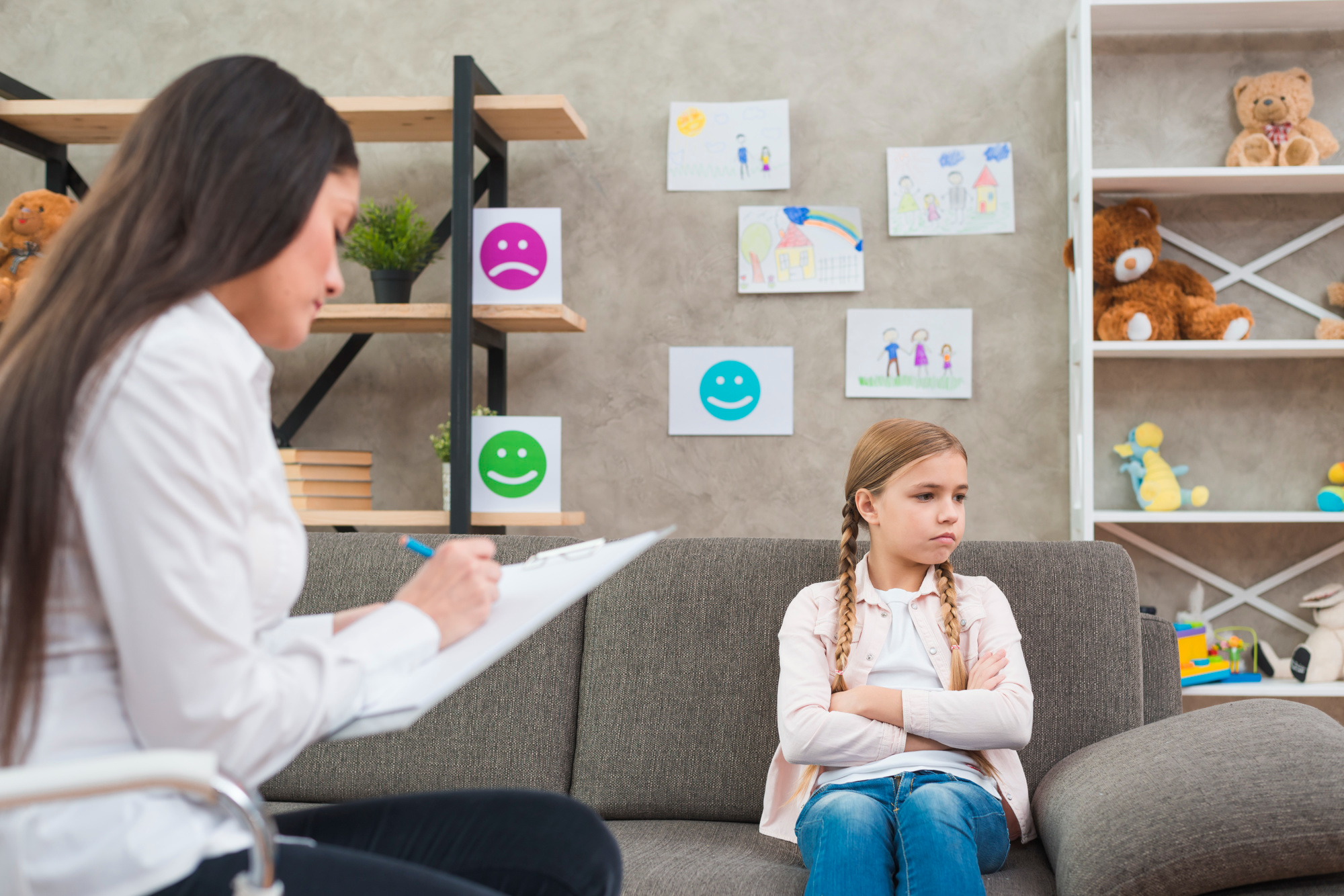

What Actually Happens During a Child Psychological Evaluation?
A child psychological evaluation is a series of structured activities, questionnaires, and conversations that measure how a child thinks, learns, pays attention, and manages emotions. It takes place over two 2-hour testing sessions and is followed by a feedback appointment where everything is explained in plain language. For most Silicon Valley parents, the unknown is the hardest part. Once families understand the actual steps involved, much of the anxiety around scheduling an evaluation tends to disappear.
That clarity is exactly what Whole Mind Psychological Services aims to provide from the very first phone call.
A child psychological evaluation is not a single test or a pass or fail experience. It is a comprehensive look at how a child's mind works, built from multiple sources of information gathered over time. Understanding the roadmap of a child psychological evaluation, from the first consultation to the final report, helps parents feel prepared and helps children walk in without unnecessary worry.
Step One: The Initial Consultation
Every child psychological evaluation begins with a conversation, not a test. During this initial consultation, a clinician will ask about your concerns, your child's developmental and academic history, and what you have already tried. This conversation helps determine which type of evaluation makes sense, whether that is testing for ADHD, autism, a learning disability, giftedness, or a combination of concerns.
Parents often find this step to be a relief on its own, since it is frequently the first time someone has listened to the full picture rather than reacting to a single symptom or report card.
Step Two: Testing Sessions
Once the plan is set, testing takes place over two 2-hour sessions. A comprehensive child psychological evaluation may include several components:
- Cognitive testing to measure reasoning, problem solving, and processing speed
- Academic testing in reading, writing, and math to compare skills against grade-level expectations
- Attention and executive functioning measures, especially when ADHD is a possible factor
- Social communication and behavioral observation, particularly when autism is being considered
- Emotional and behavioral screening, since anxiety, mood, or stress can sometimes look like or overlap with other conditions
Sessions are usually broken into manageable blocks with breaks built in, since accurate results depend on a child staying comfortable and engaged rather than overwhelmed.
Step Three: Gathering Outside Information
A reliable child psychological evaluation never relies on testing alone. Clinicians also gather input from parents and teachers through standardized questionnaires, and the CDC notes that when diagnosing ADHD, clinicians ask parents, teachers, and other caregivers about a child's behavior in different settings. This step often reveals patterns parents were not fully aware of, since teachers see a child in a very different environment than home.
Step Four: Scoring and Interpretation
After testing is complete, the clinician spends time scoring results, comparing them against age-based norms, and looking for patterns across every source of information collected, from testing scores to parent and teacher reports to developmental history. This is where the full picture of the child psychological evaluation starts to come together, often revealing connections that were not obvious from any single data point on its own.
Step Five: The Feedback Session
Once interpretation is complete, families return for a feedback session where results are explained in clear, everyday language rather than dense clinical terminology. During this meeting, parents typically learn:
- Whether a diagnosis applies, and if so, what it means for their child specifically
- How the results explain the behaviors or struggles that prompted the evaluation
- Specific recommendations for home, school, and any additional support that may help
- Whether the results support a request for a 504 Plan or an IEP through the school district
Step Six: The Written Report and Next Steps
Following the feedback session, families receive a comprehensive written report summarizing findings and recommendations. This report becomes a practical tool, one that can be shared with schools, therapists, or other providers to guide next steps. Many families use this document to request accommodations, begin targeted interventions, or start additional support such as parent coaching or executive function coaching to translate recommendations into daily routines.
The full process, from initial consultation to final report, is part of the comprehensive evaluation and assessment services offered through the practice. A child psychological evaluation built this way gives families a complete and accurate picture rather than a partial one.
Who Conducts a Child Psychological Evaluation?
A child psychological evaluation should be led by a licensed professional trained in assessment. Our team includes Licensed Educational Psychologists, and the American Psychological Association notes that licensed clinical psychologists are trained to give assessments and interpret the results. If you are comparing providers, Understood's list of 13 questions to ask before hiring a private evaluator is a helpful place to start.
School Evaluation or Private Child Psychological Evaluation?
Some families wonder whether a school's evaluation makes a private child psychological evaluation unnecessary. They are different routes. Understood explains that a school must get your consent before evaluating your child and generally must finish within 60 calendar days of your written permission, unless your state sets a different timeframe. A private evaluation follows its own schedule, and the school team still makes its own eligibility decisions. Our post on IEP and 504 testing in Silicon Valley schools explains more about that process.
How to Prepare Your Child for Testing Day
Parents often ask how much to tell their child ahead of time. In general, honesty in age-appropriate language works best:
- Explain that they will spend time with someone who wants to understand how they think and learn
- Reassure them that there are no right or wrong answers on most activities
- Avoid coaching them on how to respond, since this can affect the accuracy of results
- Make sure they are well rested and have eaten before the appointment
- Keep the tone calm and matter-of-fact, since children often take emotional cues from their parents
Understood's guide to what to expect during an evaluation offers similar advice: keep anxiety low, skip the studying, and explain that the goal is to understand your child's strengths and needs. A calm, honest approach helps a child psychological evaluation show how your child really thinks and learns.
Common Questions Parents Have Before Scheduling
- How long will the whole process take from start to finish?
- Will my child need to miss school for testing appointments?
- What if the results point to more than one condition?
- Will the report be accepted by our school district?
- What happens if we disagree with the findings or want a second opinion?
These are all reasonable questions, and a good evaluation team will walk through each of them clearly during the initial consultation, well before any testing begins.
Serving Families Across Silicon Valley
Families throughout San Jose, Santa Clara, Cupertino, Sunnyvale, Mountain View, Los Altos, Los Gatos, Saratoga, and Palo Alto rely on Whole Mind Psychological Services for a child psychological evaluation that is thorough and easy to understand. Depending on the specific concern, families may explore ADHD testing, autism testing, or dyslexia testing, all of which follow this same general roadmap while focusing on the areas most relevant to that concern. Appointments are in person at our San Jose office, and services are provided in English, Spanish, Mandarin, and Cantonese.
Frequently Asked Questions
How long does a full child psychological evaluation take?
Comprehensive evaluations take place over two 2-hour testing sessions, and the complete report is ready within 2 to 3 weeks, depending on scheduling.
Will my child need to miss school for the evaluation?
That depends on scheduling. Ask about appointment options during your consultation so you can plan around your child's school day.
What if the evaluation identifies more than one condition?
This can happen, since conditions such as ADHD, learning disabilities, and anxiety can occur together. A comprehensive child psychological evaluation is designed to capture the full picture rather than testing for just one possibility.
Can the results be used for school accommodations?
Yes. If the evaluation identifies a qualifying condition, the written report can support a request for a 504 Plan or an IEP through your child's school district, although the school team makes the final eligibility decision.
What should I bring to the initial consultation?
Report cards, teacher comments, any previous testing, and a general timeline of when concerns first appeared are all helpful, though not required to get started.
The Bottom Line
Understanding what happens during a child psychological evaluation removes much of the uncertainty that keeps families from seeking answers sooner. From the first consultation to the final report, every step is designed to build a clear, complete picture of how your child thinks, learns, and experiences the world. Whole Mind Psychological Services walks Silicon Valley families through that entire roadmap, so nothing feels unclear or overwhelming along the way.
Reach out today to schedule your child's initial consultation and take the first confident step toward real answers. Call 408-214-5751 to get started. Our founder, Michelle Esparza, is a Licensed Educational Psychologist.